
My parents were sick of the big city thing, so for the remainder of our stay in the UK, we were staying in much smaller, country towns and doing day trips. We travelled from London up to the Isle of Skye, with many detours along the way and hundreds of hours of driving. We hired a car, a BMW 5 series, that my Dad had been so excited to get he hadn’t shut up about it for the last six months. He didn’t shut up about it for the next 6 months after either, but for an entirely different reason. So strap yourselves in, here is my story of driving around England and Scotland for two months.
Salisbury
To break up the driving from London to Weston-Super-Mare, which was to be our base for the next week, we stopped in at Salisbury. Here we were able to stop and eat lunch, walk up the high street with its many historic buildings, and take a look at the cathedral. At this point we had seen many churches, some of which were truly breathtaking, and so this one visually wasn’t as exciting as others we’d seen, although gave us a sense of the English style. They are much more sombre, dark and more grey stonework in comparison to (for example) the Italian ones, with their grandeur and semi-precious inlays. This church however did have a copy of the Magna Carta on display, which of the four remaining copies is the best preserved. This particularly interested me as a future law student wannabe.


Cheddar
There was a quaint small town about half an hour from our base, which is where cheddar cheese actually originates from. Along the high street there were several stores selling cheese, as well as fudge and cider (scrumpy style, typical of the region). Traditionally in the 12th century when the cheese was first made, it would be left to mature in the caves of the Cheddar Gorge nearby, and some artisans claim to still do this. The gorge is quite picturesque to walk through, and a favourite place of many a rock climber.


Glastonbury
Glastonbury, famous for its new age music festival, seems to have given itself over to the associated clientele. Never in my life have I seen so many hippie shops selling tie dye and crystals, not to mention all in a row on one small high street. The main attraction we went to see was Glastonbury Abbey, which has quite the history. It was built in 8th century, expanded in the 10th century, then destroyed by a fire in the 12th century, at which point the Monks had a cash flow problem. However miraculously the remains of King Arthur and his Queen Guinevere were “found” on the site, and the Monks asserted that the monastery was on the site of Avalon. Saved from ruin by pilgrams and patrons, the church prospered. For 200 years at least, until King Henry VIII happened, who didn’t much care for the monasteries. They were looted; the lead stolen from the roofs, the stones repurposed, which left the Abbey in the ruin it remains today.


Barrington Court
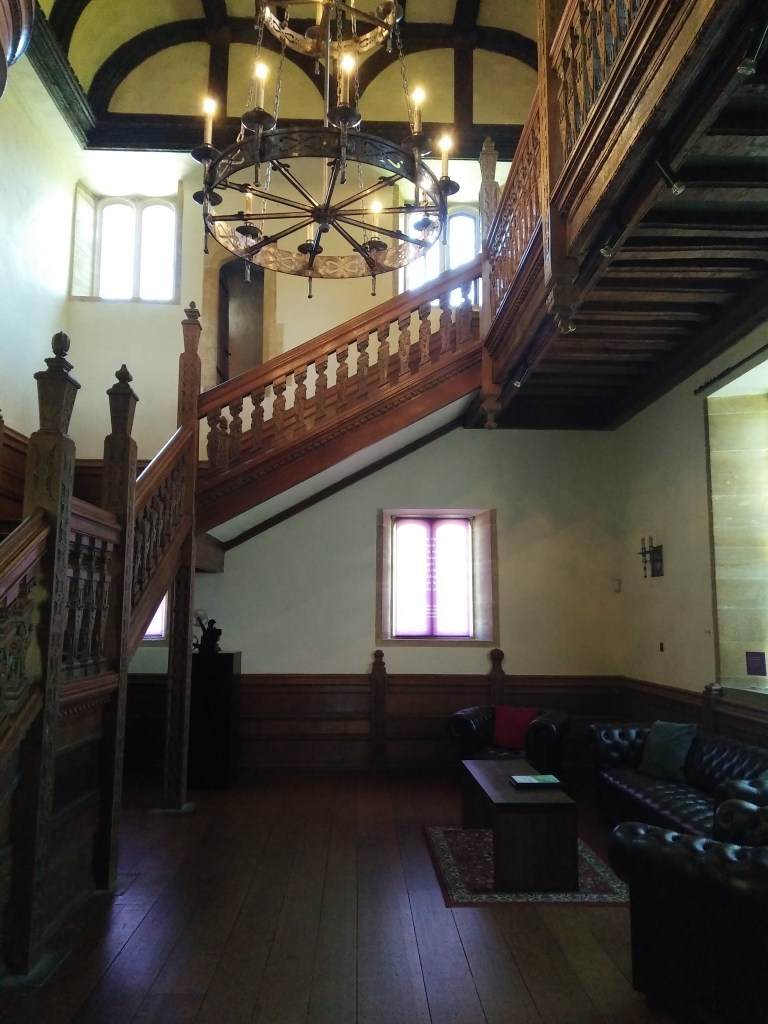
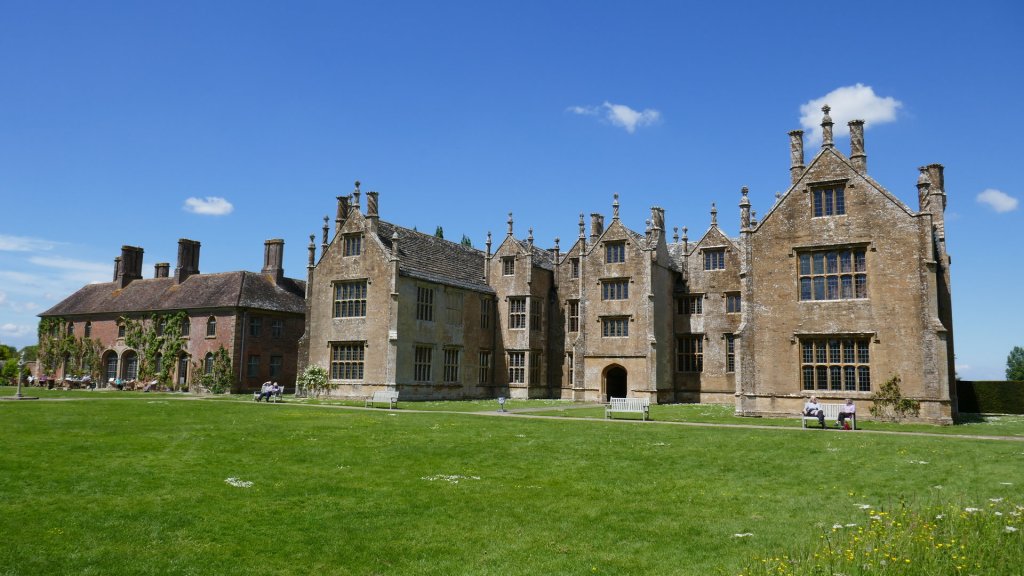
Aware of the cost of visiting places in England, Mum had the idea of getting National Trust memberships, which meant we could visit hundreds of properties in England. The first house the National Trust acquired, and coincidentally the first we visited, was Barrington Court in. It was built in the 1500’s, owned by several families, then fell into disrepair and was used as a barn. It was later gifted to the National Trust, although I doubt they would view it that way. The cost of maintenance almost bankrupted them, and for decades after they were wary of taking on new properties, and often repeated, “Remember Barrington.” The property was restored and is now used for TV and films.
Dunster
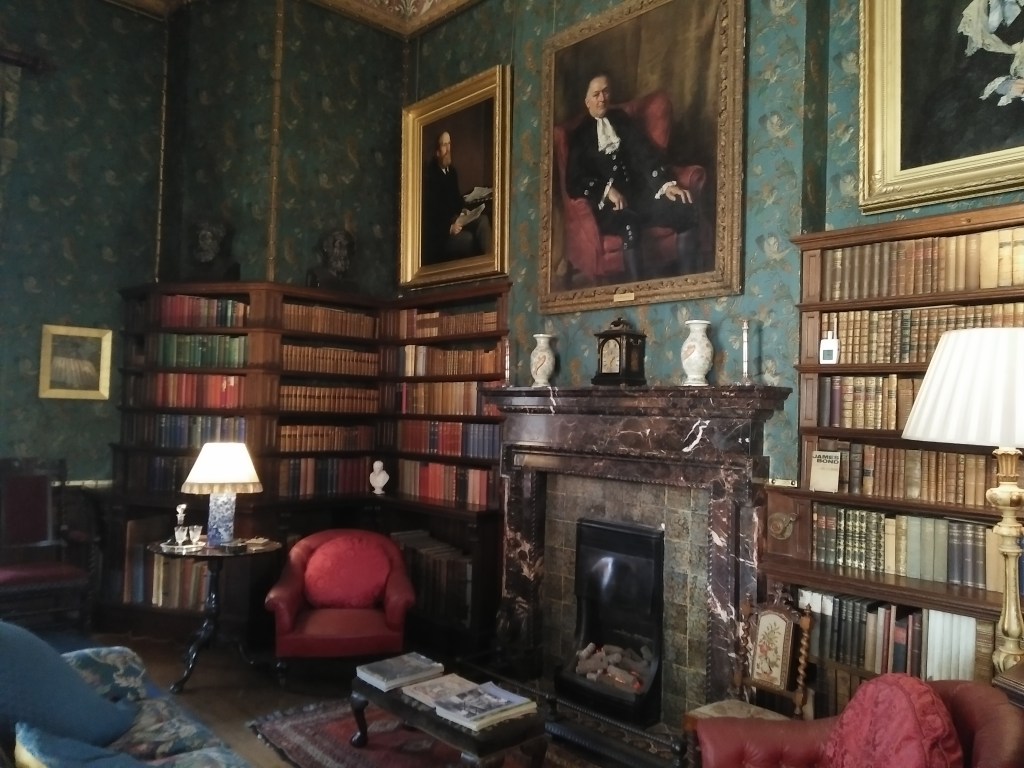
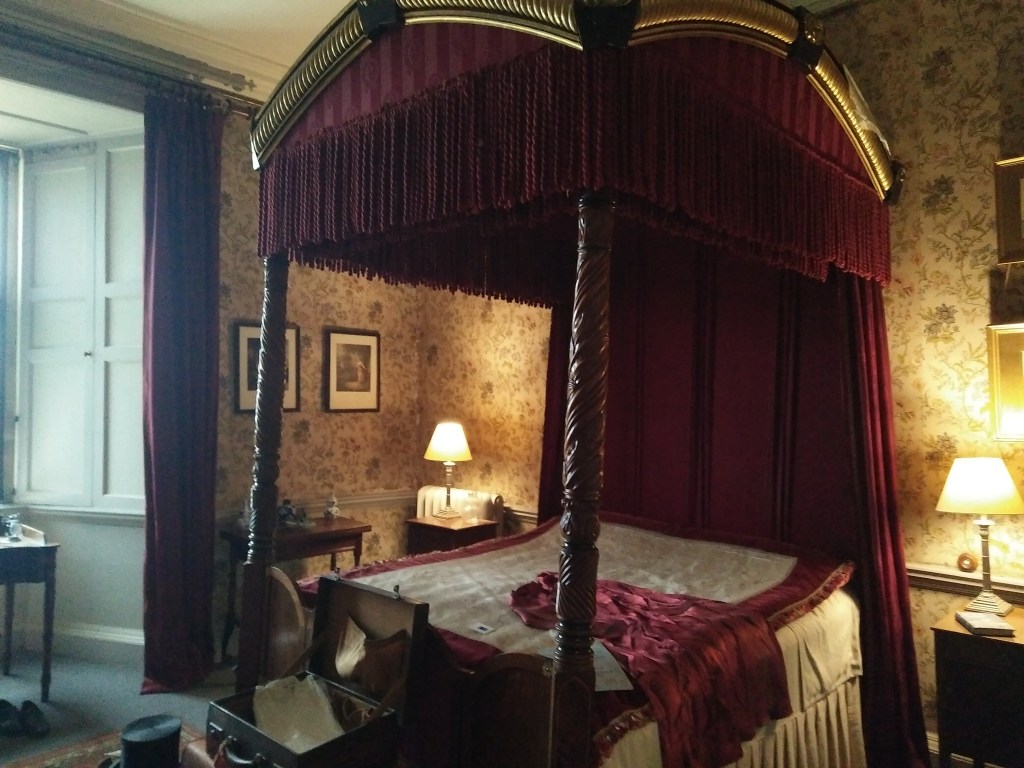
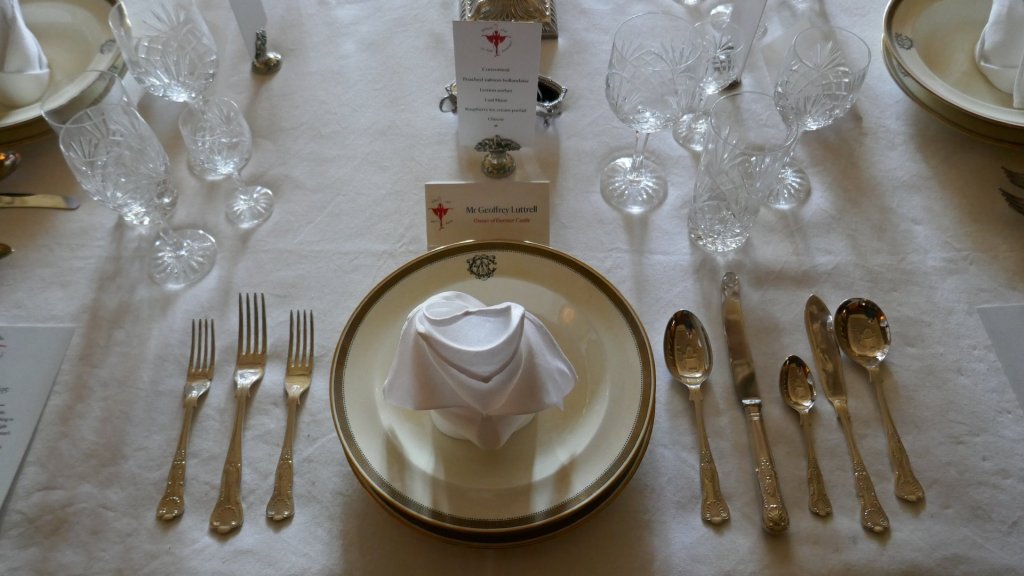
Dunster Castle was the second Trust property we visited, and one of my favourites. We began by doing a tour of the impressive gardens, then headed inside and wandered around. The castle is very large and in excellent condition. All the rooms are fully furnished and there were some interactive moments I especially enjoyed. In the kitchen there was an exercise where you had to try and set cutlery in the correct manner. I failed at this of course, but the man supervising showed me how to fold a napkin ornately, and he said I did pretty well. I beat Dad though, so that’s all that really matters.
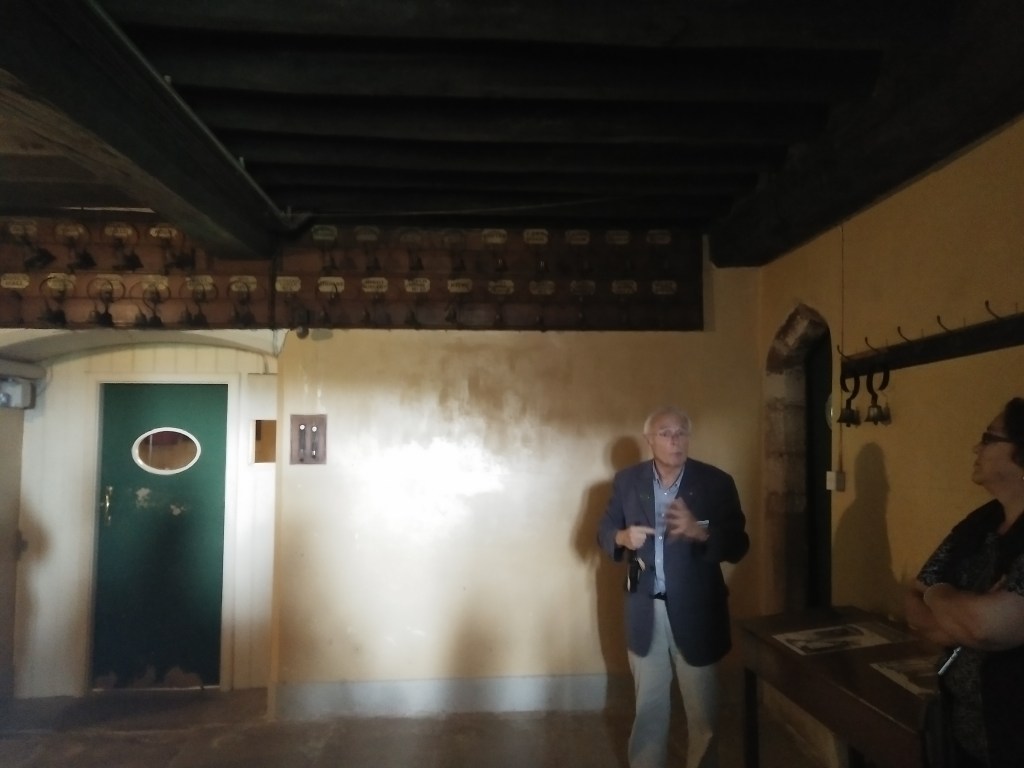
We did a tour of the kitchens below, which was quite interesting. There was a set of about a dozen or so bells, each one connected to a room upstairs. It was the job of the bell boy to monitor the bells, and send people to where they were needed. But what if he didn’t see which bell chimed you ask? Each bell was a different size, and therefore a different pitch. I think I would be terrible at that job with my tone deaf ears. The tour guide seemed to take a liking to Mum and I and let us ring one of the bells each. We felt quite special. In the kitchen itself we were shown all the different stove devices of the different time periods, and even where parts were missing, which were donated to help with the war effort when metal was scarce.
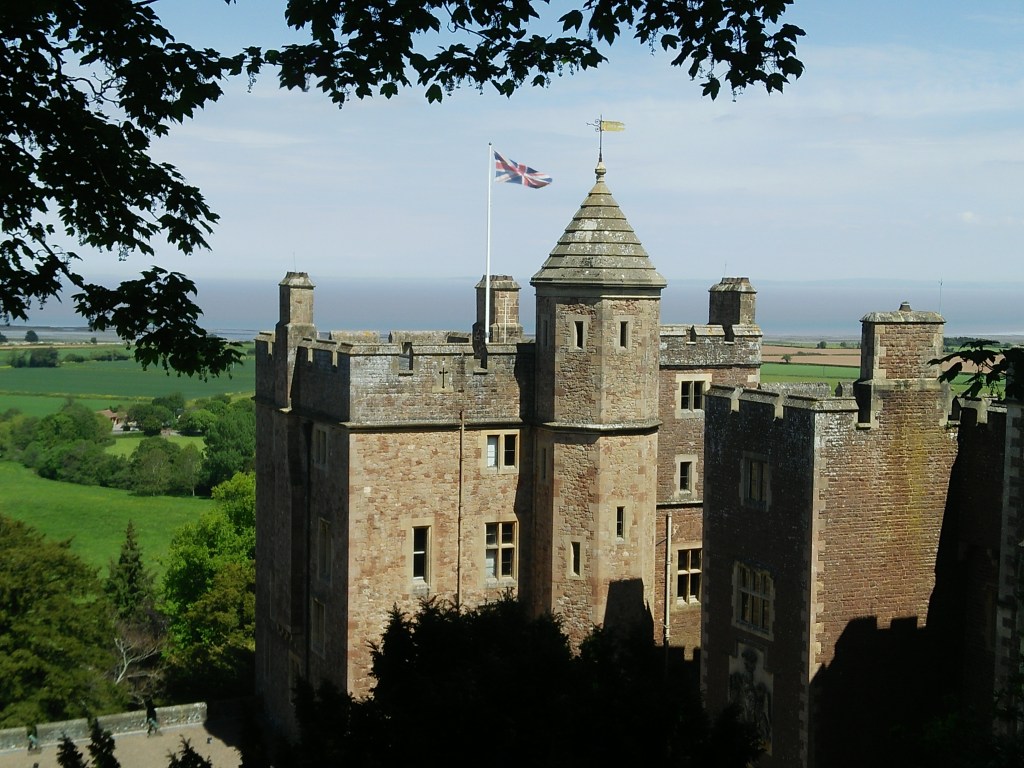
The village of Dunster is picturesque, and offers a view of the castle above. We had a lovely home cooked meal in a cafe there, and Dad even tried a suet pudding which was quite adventurous of him.

Exmoor Cliffs in Devonshire
There is a well-known track along the Exmoor Cliffs, which skirt along the shoreline about 20m above the sea. For Dad and I this was a very enjoyable experience, with the salt breeze in our hair and photo opportunities around every corner. However Mum on the other hand was having a very different experience, and was gripping onto my arm so tightly I was losing circulation, and reminding us constantly to stay away from the edge. To be fair the path really wasn’t very wide. We walked past some kids sitting on the edge of some rocks on the edge of the cliff and I told her to look away. I think she might have screamed if she saw them. We hurried onto the Valley of the Rocks, which deviated from the shore much to Mum’s liking, and saw some mountain goats happily hopping up the hillside. Exhausted from a long walk, we were all happy to return to the car.


Bath
One of the key attractions of Somerset was that we were all keen to visit Bath. We started off by doing a tour of the city, which included some of the history. In the Georgian era the city was marketed as a luxury desination. City dwellers, the old and the sick would flock to Bath in hopes of a miracle health cure (although as you may have gleaned, I am skeptical of miracles in general). Many people did actually get better, but this is attributed to the water coming from a natural spring, and therefore not containing any lead or other contaminants.

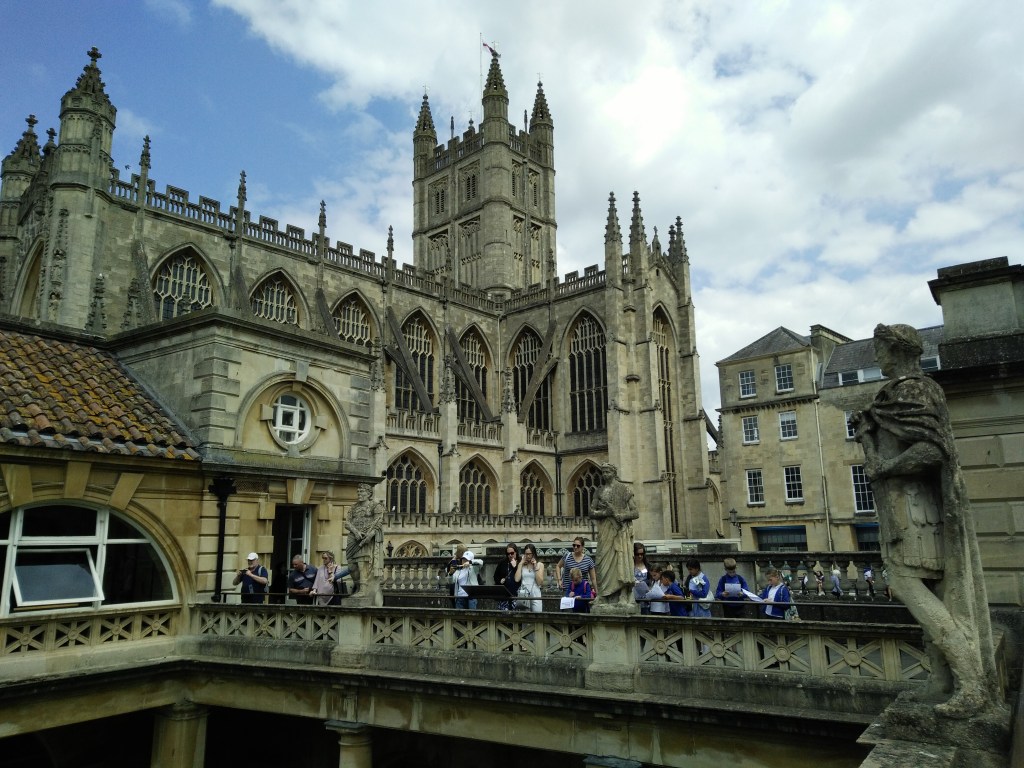
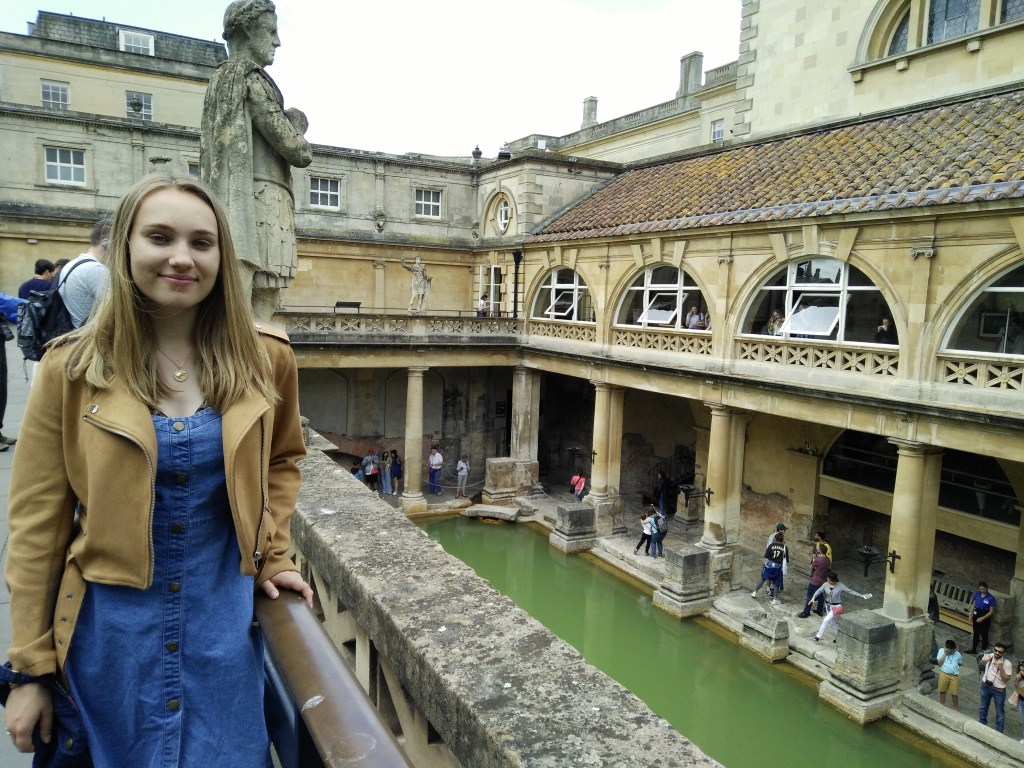
We went to the Roman baths after the tour, which I would highly recommend. They are very well maintained, and there is a lot of interesting information, as well as graphics, which make it easy to imagine what it once was. There was also an actress dressed up as a slave sitting by the baths, who Dad engaged in conversation. I always gets nervous when he does stuff like that. She stayed true to her role, and told him the woes of being a slave. He tried to cheer her up by telling her working at the baths wasn’t a bad gig in comparison to other things a slave could be doing. I’m sure that helped. To end the tour I tried some of the natural spring water, which I did not enjoy. Therapeutic benefits my arse.

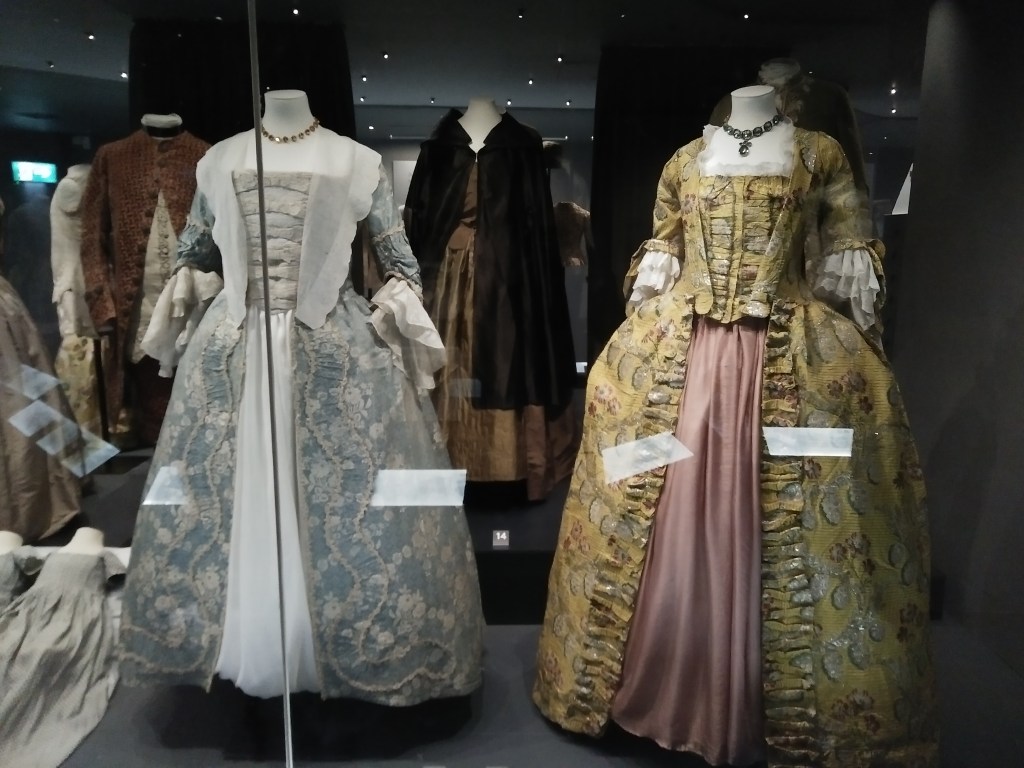
Our final stop in Bath was to the Fashion Museum which Mum had been looking forward to the entire trip. Dad got bored after about five minutes and went to the cafe for some tea, and Mum was all the way down the other spectrum and spent five minutes on each piece. I enjoyed the exhibit for what it was, some pretty, old clothing, and then played dress up. This was the part I enjoyed the most. Mum was a little disappointed with the exhibition, perhaps since she had built up the experience in her mind for months. I thought it was quite enjoyable.

Bristol
On the way back form Bath we stopped in at a pub in Bristol, to meet some people who were complete strangers to us. My parents had their DNA tested some years before, and had found a man who was supposedly closely related to my mum, despite their family trees not overlapping. Curiously though their two families both lived in the same street for several generations. We had a lovely time at the pub chatting with him, he had also brought his son along although he wasn’t much of a talker, and he told us all his theories about how our families were connected. He was very passionate about the whole thing, which made for a lively conversation, and we felt that the journey had been well worth making.

Our week in Somerset had now drawn to a close, and it was time to investigate some more of Engand’s countryside. Next we were off to Yorkshire and Bronte Country.
 Anna Fay On Holiday